

Hypnosis has attracted interest in the sporting world for decades. From Olympic competitors to professional golfers and elite mountain bikers, athletes have explored hypnosis and related mental-training techniques to help prepare for competition.
The reasons vary. Some athletes have used hypnosis to manage performance anxiety, others have explored it to improve concentration or confidence, and some have used mental rehearsal to prepare for the physical and psychological demands of their sport.
You might be surprised by the range of sporting disciplines in which hypnosis has been explored.
It is worth making one important distinction, though: not every athlete who uses visualization, meditation, or mental rehearsal is necessarily using hypnosis. These techniques can overlap, but they are not interchangeable.
Here are some documented examples, along with what we know about how hypnosis has been used in sport.
Which Olympic athletes have used hypnosis?
Several Olympic athletes have explored hypnosis or hypnotic techniques as part of their preparation.
Steve Hooker – Pole vault
Australia · Beijing 2008 Olympic champion
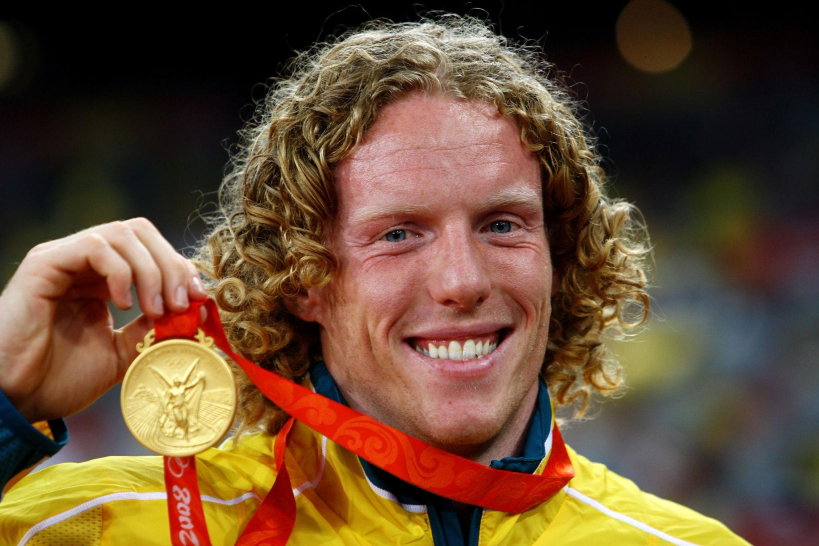
Australian pole vaulter Steve Hooker is one of the better-documented examples.
Before becoming Olympic champion, Hooker experienced a period when fear and self-doubt were seriously affecting his ability to compete. He struggled with the psychological demands of pole vaulting and even considered giving up the sport.
He explored hypnotism and visualization as ways of overcoming these difficulties.
In August 2008, he won the Olympic gold medal in Beijing, clearing 5.96 meters and setting an Olympic record. World Athletics reported on his use of hypnotism and visualization in the lead-up to his achievement.¹
His experience is particularly interesting because the techniques were intended to help him overcome fear and regain confidence, rather than simply become physically stronger.
Adam Nelson – Shot put
United States · Olympic medalist
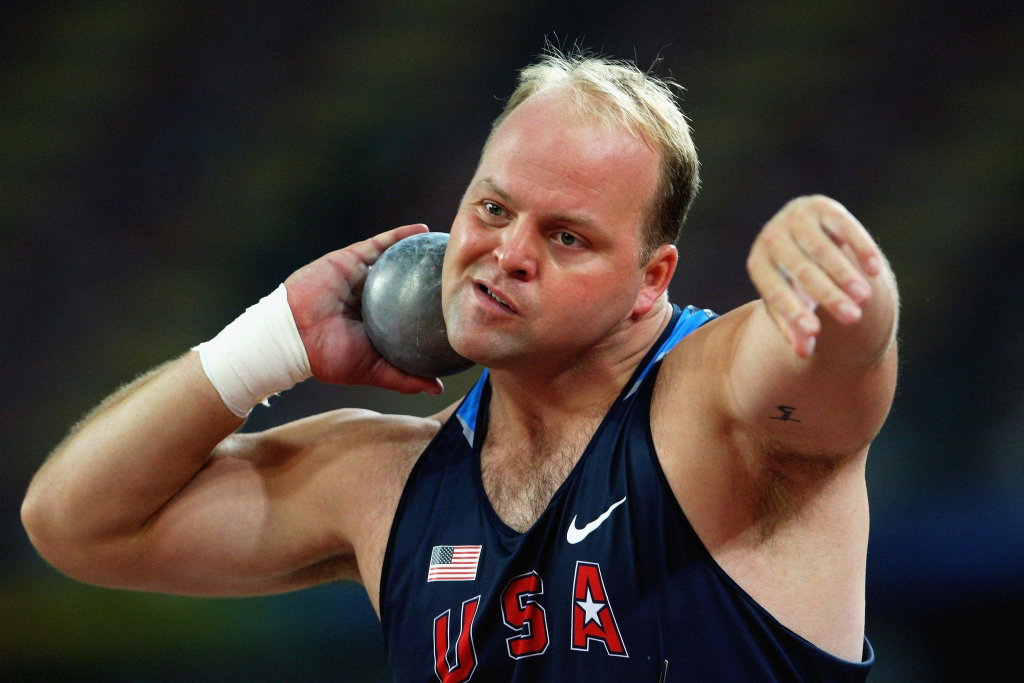
American shot putter Adam Nelson worked with sports hypnotherapist Pete Siegel while preparing for the 2008 Beijing Olympics.
In a 2008 report, NPR's Tom Goldman described a hypnosis session in which Siegel guided Nelson through an imaginary shot-put performance.
The exercise involved mentally rehearsing the movement, imagining the physical sensations associated with a successful throw, and reinforcing a performance cue.
Nelson was already an accomplished athlete, having won Olympic silver medals in 2000 and 2004.
Although Siegel was optimistic about the potential benefits, Nelson did not win gold in Beijing. He did not record a valid throw in the Olympic final.²
This example is useful because it illustrates that hypnosis is not a guarantee of sporting success. Even experienced athletes using mental-training techniques cannot control every aspect of competition.
Which professional boxers have used hypnosis?
Boxing is an especially interesting sport in which to explore hypnosis because mental preparation can play an important role in confidence, composure, and dealing with competitive pressure.
Steve Collins – Professional boxing
Ireland · Former world super-middleweight champion
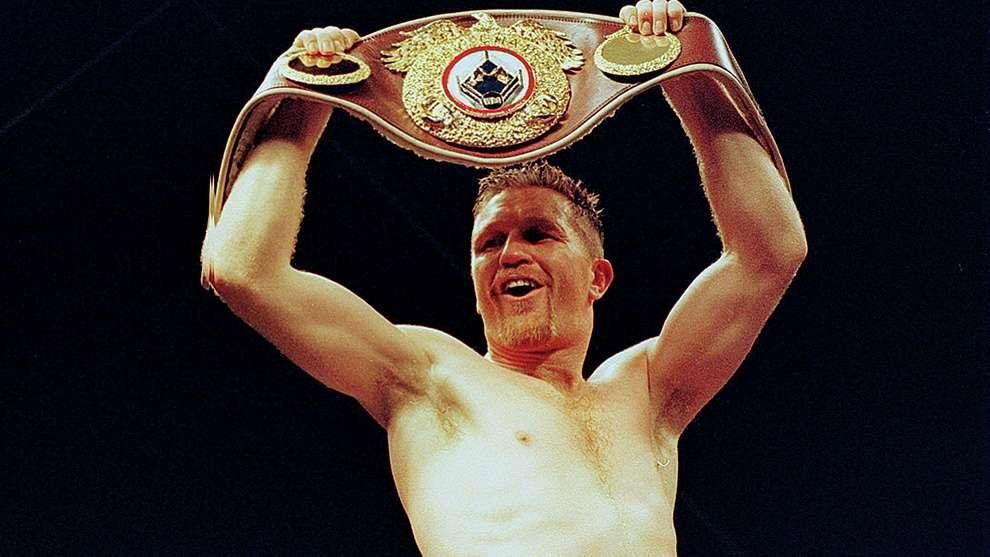
Irish boxer Steve Collins became associated with hypnosis during his preparation for his 1995 world title fight against Chris Eubank.
Collins worked with a practitioner named Tony Quinn, and hypnosis became part of the psychological story surrounding the fight.
There was considerable publicity about claims that Collins had been hypnotically conditioned to withstand pain and continue fighting.
However, it is important to distinguish the publicity surrounding these claims from scientifically established effects.
Collins himself later explained that the hypnosis story was also used as a psychological tactic to unsettle Eubank before their encounter.³
Collins went on to defeat Eubank in their first fight and again in their 1996 rematch.
His experience illustrates an interesting aspect of sports psychology: an opponent's beliefs and expectations can sometimes become part of the psychological competition itself.
It would be misleading, however, to conclude that hypnosis made Collins immune to pain or physically invulnerable.
Have professional golfers used hypnosis?
Yes. Golf is one of the sports in which hypnosis has received considerable research attention.
The game places substantial demands on concentration, emotional control, confidence, and the ability to perform precise movements under pressure.
A golfer might execute a shot beautifully during practice but struggle to reproduce the same performance when a tournament is at stake.
Hypnosis has therefore been explored as a way of helping golfers develop consistent mental routines.
An elite senior European Tour golfer
A particularly interesting example comes from a 2013 study by sports researcher John Pates.
The study examined an elite senior European Tour professional who received a hypnosis intervention during 11 tournament events.
The researcher assessed the golfer's performance and reported improvements in both average stroke performance and measured flow-state experiences during the intervention period.⁴
The golfer was not identified by name in the published study.
This is an important example because it involves an actual professional golfer rather than simply someone experimenting with relaxation techniques.
Nevertheless, it was a single-subject study, so the findings cannot establish that hypnosis will produce comparable improvements in other golfers.
A senior PGA Tour golfer
Another study by John Pates, published in 2021, investigated a hypnotic intervention involving a senior PGA Tour golfer.
The program combined hypnosis, imagery, a trigger-control technique, and a pre-shot routine.
The researchers reported that the golfer's average stroke performance decreased from baseline to the postintervention period. Qualitative findings also suggested improvements in the golfer's ability to regulate emotions, thoughts, and perceptions associated with performing under pressure.⁵
Again, the player's identity was not disclosed.
These studies demonstrate that hypnosis has been explored in professional golf, although they should not be interpreted as proof that every golfer will benefit.
Have mountain bikers used hypnosis?
Yes. An interesting example comes from research involving elite downhill mountain bikers.
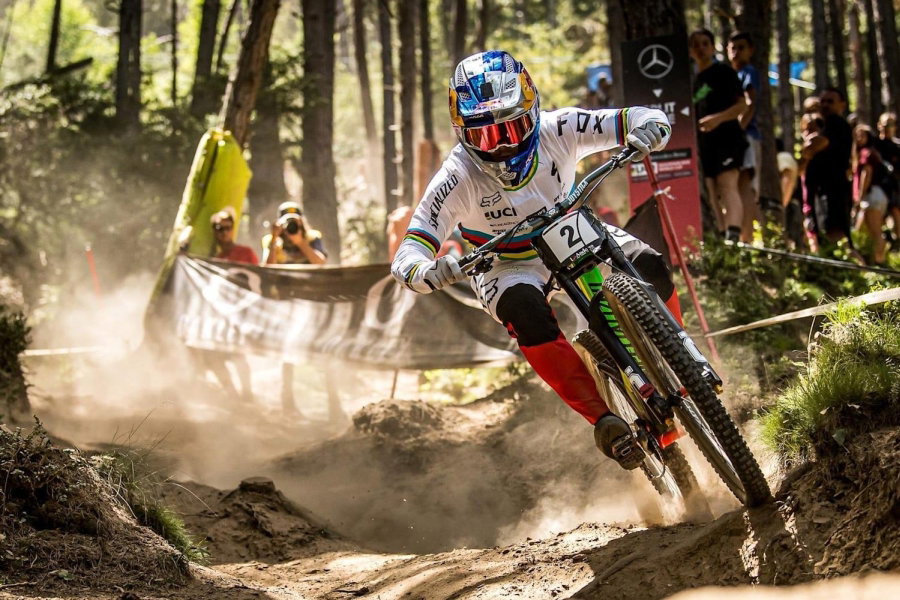
A 2024 study investigated a hypnosis-based audio intervention involving 19 elite downhill mountain bike athletes competing in two races.
The athletes listened to a recorded hypnosis intervention between the competitions.
The exercise encouraged them to imagine an optimal race, including the sensations associated with performing successfully and crossing the finish line.
Researchers measured several psychological and physiological indicators, including:
Competitive anxiety.
Perceived stress.
Self-confidence.
Psychological resilience.
Flow experiences.
Heart-rate variability.
Following the intervention, the researchers reported significant reductions in competitive anxiety and perceived stress, alongside increased self-confidence and heart-rate variability.⁶
This is an interesting development because it demonstrates how hypnosis can be delivered through an audio recording rather than requiring an individual hypnotherapist to work with every athlete in person.
It is also worth noting that the research involved a relatively small group and two competitions. The results are encouraging, but further research is needed to establish how reliably the approach works.
Have athletes used self-hypnosis rather than seeing a hypnotherapist?
Absolutely.
Self-hypnosis can be particularly attractive to athletes because it allows them to practice mental preparation independently.
Rather than relying entirely on appointments with a practitioner, an athlete can learn techniques involving focused attention, relaxation, imagery, and positive suggestions.
An interesting published example comes from Priscilla A. Morton, an experienced alpine mountaineer.
In a 2003 article in the American Journal of Clinical Hypnosis, Morton described using self-hypnosis following climbing injuries and during her preparation to return to mountaineering.
She used techniques including mental rehearsal, confidence-building suggestions, and imagery to help her manage the psychological challenges associated with climbing.
She also described using self-hypnosis during successful ascents of Ecuador's Cotopaxi and Washington State's Mount Shuksan.⁷
Her account illustrates how self-hypnosis can be incorporated into an athlete's preparation for physically and psychologically demanding activities.
It is a personal case report, rather than a controlled scientific experiment, but it provides an interesting first-hand example of self-hypnosis in sport.
Are there other athletes who have experimented with hypnosis?
There are historical reports of hypnosis being used in different sporting disciplines, although the quality of the documentation varies.
For example, a 1965 research paper by Gosaku Naruse discussed hypnotic techniques, self-hypnosis, and relaxation in the treatment of performance anxiety among champion athletes.
The paper included illustrative case histories involving athletes who participated in the 1960 Olympic Games.⁸
Other published research has examined hypnosis in:
Archery.
Soccer.
Cricket.
Basketball.
Badminton.
Weightlifting.
Shooting sports.
Not all of these studies identify their participants by name.
That distinction matters. It is possible to establish that athletes in a particular sport have participated in hypnosis research without being able to identify the individuals involved.
It is also important not to assume that famous athletes such as Michael Jordan, Tiger Woods, or Mary Lou Retton necessarily used formal hypnosis simply because they have been associated with visualization, mental rehearsal, or sports psychology.
Those techniques can be useful without involving hypnosis.
Why do athletes use hypnosis?
Athletes may explore hypnosis for several different reasons.
The objective is generally to support the psychological aspects of sporting performance rather than replace physical training.
Some of the most commonly explored applications include the following.
1. Improving concentration
Athletes need to maintain their attention, particularly when competing in environments filled with distractions.
Hypnosis may help some individuals practice focused attention and mental preparation.
2. Managing performance anxiety
Competition can create considerable psychological pressure.
Hypnosis may be used to practice relaxation and develop a calmer response to stressful situations.
3. Building confidence
Confidence can influence how athletes approach training and competition.
Positive suggestions and mental rehearsal may help reinforce confidence in previously practiced skills.
4. Overcoming fear
Some athletes experience fear following an injury, a disappointing performance, or a particularly difficult experience.
Hypnosis and imagery may provide additional ways to address these psychological obstacles.
5. Improving mental rehearsal
Athletes sometimes imagine themselves performing a movement successfully before attempting it physically.
Hypnosis can be combined with this type of imagery to create a structured mental preparation exercise.
6. Developing consistent routines
Pre-performance routines can help athletes establish a familiar approach to competition.
Hypnotic suggestions and mental rehearsal may be incorporated into these routines.
Does scientific research support the use of hypnosis in sports?
There is a growing body of research examining hypnosis and athletic performance, although the strength of the evidence varies.
A 2022 review by Zhe Li and Su-Xia Li, published in Frontiers in Psychology, examined the application of hypnosis in sports.
The authors discussed research involving different sporting activities and potential benefits involving confidence, anxiety management, concentration, and skill development.
They also highlighted important limitations in the existing evidence, including small sample sizes, weaknesses in research design, and a shortage of rigorous controlled studies.⁹
One particularly relevant example is a 2020 study by Sabrina Mattle, Daniel Birrer, and Achim Elfering involving eight Swiss national-team air-rifle shooters.
The researchers investigated the effects of a single hypnosis intervention on shooting performance.
Results varied between participants: some showed small improvements, while others showed little change or a decline in performance.¹⁰
This illustrates why it is important to avoid exaggerated claims about hypnosis and sporting achievement.
Some studies report encouraging findings, but the results do not establish that hypnosis will improve every athlete's performance.
Can hypnosis make someone a better athlete?
It may help some athletes address psychological challenges that interfere with their performance, but it cannot replace the physical and technical training required to excel in sport.
An Olympic athlete still needs strength, endurance, coordination, technique, experience, and consistent practice.
Hypnosis does not automatically supply these abilities.
Its potential value lies in supporting the mental aspects of performance, such as confidence, focus, relaxation, and mental rehearsal.
For an athlete who struggles with competitive anxiety, for example, learning to manage those feelings may make it easier to perform skills they have already developed through training.
Similarly, an athlete who has lost confidence following an injury might find mental rehearsal helpful when preparing to return to competition.
The best way to view hypnosis is as a possible complementary tool within a broader sports-training program.
Could hypnosis help amateur athletes too?
Certainly worth exploring!
You do not need to be an Olympic competitor or professional athlete to experience the psychological pressures associated with sport.
Perhaps you play recreational tennis, enjoy running, participate in martial arts, or compete in local cycling events.
You might struggle with pre-competition nerves, lose concentration during important moments, or find it difficult to regain confidence after making a mistake.
Hypnosis or self-hypnosis may provide an additional way to practice relaxation, mental rehearsal, and confidence-building.
For example, you could visualize yourself:
Remaining calm before a competition.
Maintaining concentration throughout an event.
Recovering your composure after a mistake.
Executing a familiar technique confidently.
Finishing an event with a positive attitude.
These exercises should complement physical practice rather than replace it.
If you are interested in trying hypnosis for sports performance, consider working with a suitably qualified practitioner who understands both hypnosis and the psychological demands of athletic activity.
What can we learn from athletes who have used hypnosis?
The experiences of athletes such as Steve Hooker, Adam Nelson, and Steve Collins, together with research involving professional golfers, mountain bikers, and other competitors, demonstrate that hypnosis has attracted genuine interest in the sporting world.
The applications are varied.
Some athletes have explored it to overcome fear, others have used it to develop confidence, and researchers have investigated its potential to support concentration, mental rehearsal, and emotional regulation.
However, there is an important lesson in these examples.
Hypnosis is not a substitute for talent, dedication, physical conditioning, or practice.
Nor does every athlete who experiments with hypnosis necessarily achieve better results.
What the research does suggest is that mental preparation deserves attention alongside physical preparation.
Sport is not simply about what your body can do. It is also about how you approach challenges, respond to pressure, and make use of the skills you have developed.
For some athletes, hypnosis may be a useful addition to that process.
And perhaps that is the most interesting takeaway: developing your mental approach to sport can be just as worthwhile as working on your physical technique.
Notes
1. World Athletics, “Hooker Visualises His Way to ‘What Every Kid Dreams Of,’” August 23, 2008.
2. Tom Goldman, “Athlete Tries Hypnotism in Quest for Olympic Gold,” NPR, May 27, 2008.
3. John Roberts, “Collins Learns the Conquest of Pain,” The Independent, December 11, 1995; “Collins Mellow but Fully Poised for Benn’s Challenge,” The Irish Times, July 5, 1996.
4. John Pates, “The Effects of Hypnosis on an Elite Senior European Tour Golfer: A Single-Subject Design,” International Journal of Clinical and Experimental Hypnosis 61, no. 2 (2013): 193–204.
5. John Pates, “Clutch-Based Hypnotic Intervention to Improve Golf Performance: A Case Study,” International Journal of Clinical and Experimental Hypnosis 69, no. 2 (2021): 246–52.
6. “Starting in Your Mental Pole Position: Hypnosis Helps Elite Downhill Mountainbike Athletes to Reach Their Optimal Racing Mindset,” Frontiers in Psychology 15 (2024): article 1334288.
7. Priscilla A. Morton, “The Hypnotic Belay in Alpine Mountaineering: The Use of Self-Hypnosis for the Resolution of Sports Injuries and for Performance Enhancement,” American Journal of Clinical Hypnosis 46, no. 1 (2003): 45–51.
8. Gosaku Naruse, “The Hypnotic Treatment of Stage Fright in Champion Athletes,” International Journal of Clinical and Experimental Hypnosis 13, no. 2 (1965): 63–70.
9. Zhe Li and Su-Xia Li, “The Application of Hypnosis in Sports,” Frontiers in Psychology 12 (2022): article 771162.
10. Sabrina Mattle, Daniel Birrer, and Achim Elfering, “Feasibility of Hypnosis on Performance in Air Rifle Shooting Competition,” International Journal of Clinical and Experimental Hypnosis 68, no. 4 (2020): 521–29.